Friday, January 21, 2011

Lecture for Week 3

Science consists of scientific attitudes, scientific skills and also scientific knowledge. Today’s lecture was discussing on scientific knowledge. Scientific knowledge consists of facts, concepts, theories, and principle and law. Facts and concepts are quite hard to differentiate but facts are something that can’t be explain and is a single sentence.

Then, teaching theories are what we are going to learn. There are 5 theories, which are using example and non-example, use of advance organizer such as concept maps, use of images and analogies, use of various presentations such as models and symbols, and use of experiments.

i. Giving example and non-example

- Use similar concepts

- Steps:

i. Identify the concept

ii. List the characteristics of example

iii. List the characteristics of non-example

iv. Identify characteristics that differentiate the two concepts

v. Classify the characteristic

ii. Concepts map

- Consists of many details or information of that topic

- Different from mind map as mind map is more simple and concept maps is more detail

- There are severe type of concept map

i. Hierarchical concept maps

ii. Cluster concept maps

iii. Chain concept maps

- Use of concept map:

1. Teaching a topic

2. Reinforce understanding

3. Check learning and identify misconception

4. Evaluation

iii. Use of experiment

- Demonstrate the experiment and observe

- Explain to the students the concept behind the experiment

- Seeing is believing

iv. The use of analogies & images

- An analogy is a comparison between two different things in order to highlight some point of similarity

- Example:

A heart is like a pump

An eye is like camera

A kidney is like a waste filter

- An image can be said to be picture or photo

v. Models and symbol

- Symbol ~ something such as an object, picture, written word, sound, or particular mark that represents something else by association, resemblance, or convention

- Example: ‘+’ is plus

- Model - representation of an object

- Example
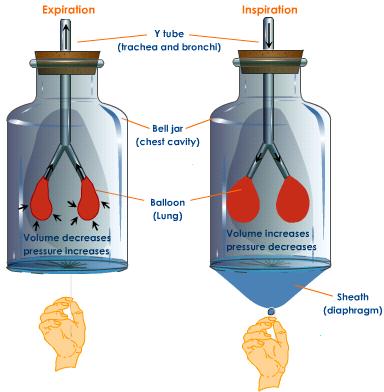

Wednesday, January 12, 2011

Learning Theories

Learning theories are something that we can’t forget about when we are discussing on teaching. The learning theories that we are looking on are behaviorism and also cognitivism.

What is learning theory?

  • Learning is a lifelong activity
  • Can be intentionally or incidentally
  • A complex affair which involves a persisting change in human performance or performance potential
  • Theory is then a set of laws or principles about learning

Behaviorism:

i. Pavlov classical conditioning
Classical conditioning is a reflexive or automatic type of learning in which a stimulus acquires the capacity to evoke a response that was originally evoked by another stimulus. Originators and Key Contributors: First described by Ivan Pavlov (1849-1936), Russian physiologist, in 1903, and studied in infants by John B. Watson (1878-1958).


ii. Skinner operant conditioning


Operant conditioning (sometimes referred to as instrumental conditioning) is a method of learning that occurs through rewards and punishments for behavior. Through operant conditioning, an association is made between a behavior and a consequence for that behavior.

Thus, we can conclude that


Cognitivism:

i. Piaget’s theory of cognitive development

ii. Vygotsky’s social development theory


Vygotsky believed that development is a process that should be analyzed, instead of a product to be obtained. Vygotsky believed that this life long process of development was dependent on social interaction and that social learning actually leads to cognitive development. This phenomena is called the Zone of Proximal Development . Vygotsky describes it as "the distance between the actual development level as determined by independent problem solving and the level of potential development as determined through problem solving under adult guidance or in collaboration with more capable peers" (Vygotsky, 1978). In other words, a student can perform a task under adult guidance or with peer collaboration that could not be achieved alone. The Zone of Proximal Development bridges that gap between what is known and what can be known. Vygotsky claimed that learning occurred in this zone.


iii. Information processing theory